

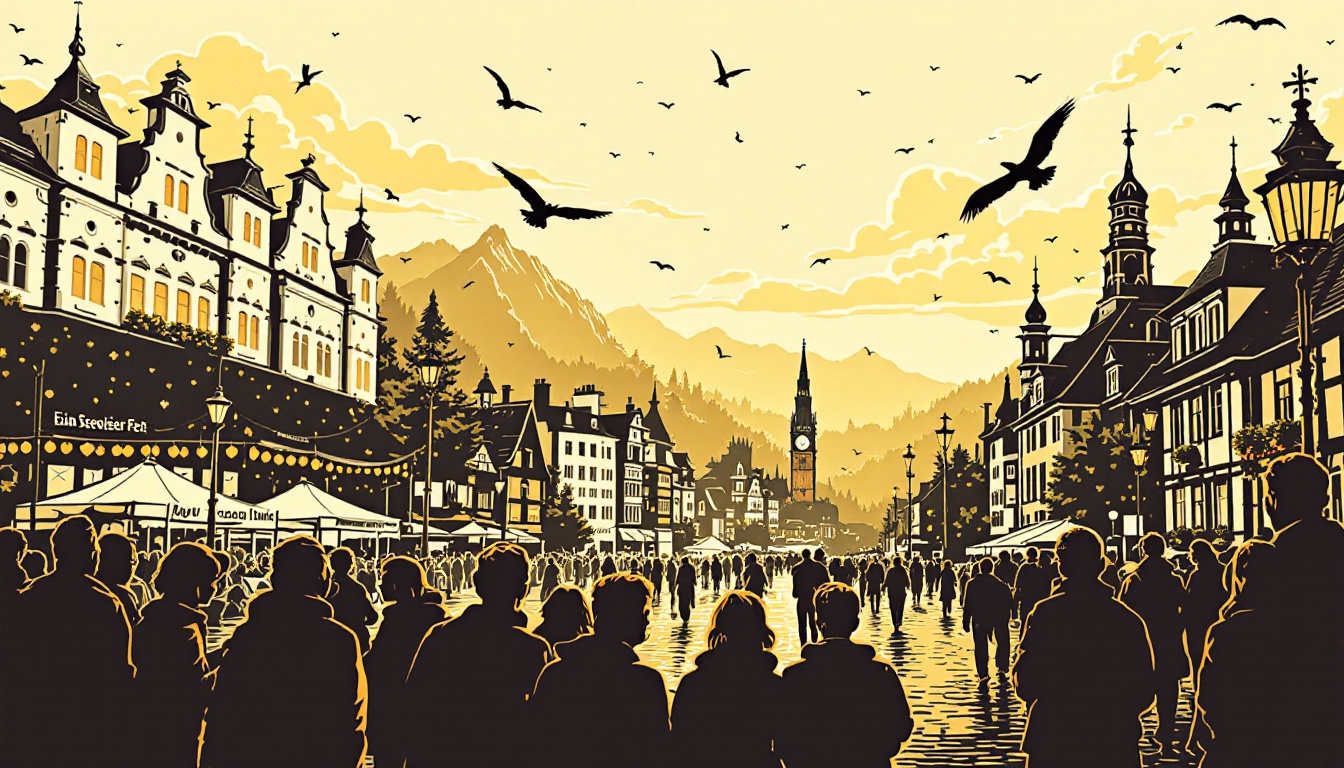
When winter burns: Sächsilüüte in Zurich
Every third Monday in April, Zurich transforms into a grand open-air theatre. Sächsilüüte – literally «six o'clock bells» – is arguably Switzerland's most famous spring festival and has been part of the UNESCO Cultural Heritage since 2017.
The highlight of the festival is the burning of the Böögg: a snowman figure made of cotton wool and paper, filled with fireworks. The time it takes for the Böögg's head to explode is considered a forecast for the coming summer:
- Short burning time = hot, beautiful summer
- Long burning time = cold, rainy summer
Before the burning, the guilds – Zurich's historic trade guilds – parade through the old town in magnificent costumes. For tourists, this is an unparalleled spectacle of tradition, folklore, and genuine popular joy.
Noise, bells, and banishment: More unusual customs
Switzerland is rich in customs that may seem strange at first glance – but are deeply rooted in history.
Chalandamarz – Engadin, Graubünden
On 1 March, children march through the villages of the Engadin with bells and whips to drive away winter. The noise is meant to chase away evil spirits and the cold. A colourful, loud, and heartwarming tradition.
Klausjagen – Küssnacht am Rigi
On the night of 5 to 6 December, hundreds of men march through the streets wearing enormous, illuminated Iffelen (bishop's mitres) – accompanied by deafening bell noise. It is one of the loudest nights in Switzerland.
Knabenschiessen – Zurich
Since the 17th century, young people have competed at the Knabenschiessen at Zurich's shooting range. Today both girls and boys take part – the title of «Schützenkönig» or «Schützenkönigin» (shooting king or queen) is highly coveted.
- All of these customs unite community, history, and symbolism
- They take place mostly at fixed times of year
- Many are on the UNESCO list of intangible cultural heritage
Travel tip: Experience customs live
Anyone who truly wants to understand Switzerland should experience it not only through museums, but through its living traditions. These customs are not museum exhibits – they are lived by real people with genuine passion.
How to plan your visit:
- Sächsilüüte: Third Monday in April, Zurich – free, open to the public
- Chalandamarz: 1 March, Engadin (e.g. Scuol, Zuoz) – ideal to combine with a ski holiday
- Klausjagen: 5 December, Küssnacht am Rigi – arriving by train is recommended
- Knabenschiessen: Second weekend in September, Zurich-Albisgütli
Practical information:
- Most events are free and open to everyone
- Arriving early is worthwhile – the venues tend to fill up quickly
- Information at MySwitzerland.com or at local tourist offices
Switzerland's quirky customs are more than folklore – they are a living window into the soul of a country that cherishes its traditions with pride and humour.